
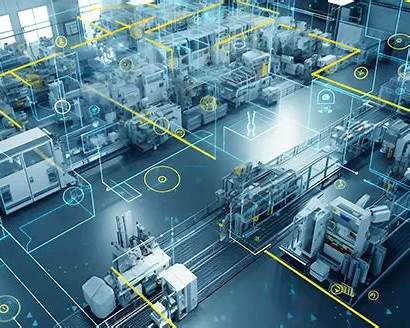
If you could see every delay, misstep, and hidden slowdown inside your process in real time, how fast could your business improve? Most companies rely on tribal knowledge or end of month reports to discover operational problems, but by then the damage is already done. The real opportunity is using AI to pinpoint bottlenecks as they happen, allowing Lean principles to do what they do best: remove waste, speed up flow, and increase profit. In one operation I worked with, simply using AI to highlight delays in material movement reduced cycle time by 12 percent. Here is how AI and Lean work together and what it means for your business.
AI and Lean Are Not Opposites. They Are Accelerators.
For years, Lean practitioners have said that the best way to understand a process is to walk it, observe it, and map it. That is still true. Lean is built on real-world observation. But today, AI gives us the ability to observe more, see more, and find patterns humans would never be able to detect in time.
Lean identifies the waste.
AI helps you find it faster.
Most companies do not fail because they lack data. They fail because the data arrives too late or is too overwhelming to interpret. AI solves this problem by watching what is actually happening in the process and flagging abnormalities the moment they occur. That is exactly what happened in the case study below.
The Case Study: A 12 Percent Cycle Time Reduction Powered by AI
A mid-sized operation experienced inconsistent output and unpredictable cycle times. Leadership believed the issue was staffing, equipment, or even operator discipline. Instead of guessing, we used AI to analyze real-time material movement across the floor.
The AI identified something surprising.
The delays were not happening at the workstations.
They were happening between them.
Material sat idle longer than anyone realized, and the movement patterns were inefficient. Workers compensated the best they could, but the system itself made flow slower than necessary.
Once we knew the truth, Lean problem solving took over:
We remapped the material flow.
We redesigned staging points and travel paths.
We balanced workloads based on real cycle time data rather than assumptions.
The result was clear.
Cycle time dropped by 12 percent with no new equipment and no extra labor.
The AI did not replace Lean.
It enabled Lean to work faster and more accurately.
How AI Supercharges Lean Improvement
Here are the biggest ways AI enhances traditional Lean tools.
1. Faster Bottleneck Identification
Finding the true bottleneck is often the hardest part of improvement work. AI solves that by:
Tracking movement automatically
Flagging delays as they occur
Highlighting time lost between steps
Showing where work piles up
Instead of guessing or relying on one-time observations, you see actual patterns across thousands of cycles.
2. Real-Time Visibility Instead of End-of-Month Surprises
Lean thrives on immediate feedback loops. AI gives you:
Live dashboards
Alerts for abnormal delays
Predictive patterns that show future slowdowns
This kind of visibility keeps teams focused on what matters without drowning in data.
3. Confident Decision-Making Based on Facts, Not Feelings
One of the biggest struggles in improvement work is overcoming subjective opinions.
AI provides neutral ground.
Lean provides the method.
Together they create alignment around the truth of what is happening.
4. Eliminating Waste Before It Becomes Expensive
When AI highlights inefficiencies early, you can:
Fix small problems before they snowball
Reassign people based on real workload
Avoid unnecessary capital spending
Improve customer experience
Waste does not have time to grow roots.
What AI Cannot Do
AI cannot fix culture.
AI cannot redesign a process on its own.
AI cannot hold people accountable or teach them to follow standards.
That is where Lean thinking remains unmatched.
Lean builds clarity, discipline, and ownership.
AI provides detection and insight.
The combination is powerful because each fills the other’s gaps.
Where Most Companies Get Stuck
Even large operations tend to fall into one of these traps:
They collect tons of data but never use it.
They chase automation before understanding their process.
They treat AI as a magic wand instead of a tool.
They try to fix symptoms instead of causes.
The key is sequencing.
Before you improve a process, you must see it clearly.
AI makes that visibility sharper and faster.
How You Can Start Using AI + Lean Today
You do not need a massive budget or a full transformation. Start simple.
1. Pick one process and ask one question
Where does work stall?
Even without AI, this shifts attention to flow.
2. Use small AI tools, not giant platforms
There are inexpensive apps that track material movement, employee load, or machine downtime with minimal setup.
3. Pair AI insights with Lean practices
Process mapping
Root cause analysis
Standard work
Flow redesign
AI shows the problem.
Lean fixes it.
4. Measure the impact immediately
Cycle time, throughput, and work-in-process levels will show improvement fast when the combination is done right.
AI + Lean Is the Future of Operational Excellence
The businesses that thrive over the next decade will not be the ones with the most data or the most automation. They will be the ones who understand their processes deeply and use AI to enhance that understanding.
If you have ever wished you could see the bottlenecks the moment they happen, reduce cycle time without spending money, or make improvement decisions based entirely on facts, then AI and Lean together can give you exactly that.
And as the case study showed, even small insights can create big results. A 12 percent cycle time reduction is not a miracle. It is what happens when visibility meets disciplined improvement.

